2026-06-09
From Imperial Banquets to Global Bowls: History of Lanzhou Noodles
Discover how a humble Northwest Chinese noodle evolved from imperial banquet fare to a global phenomenon, defined by five sacred colors and a master craftsman's hand-pulling technique.
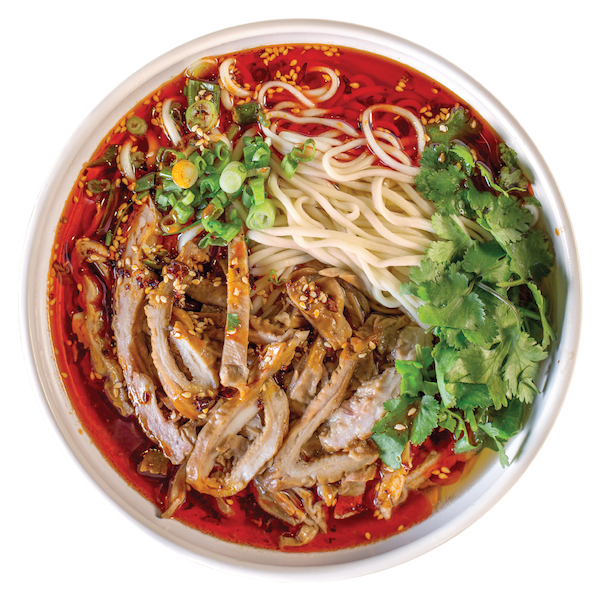
The Silk Road Origins
Lanzhou beef hand-pulled noodles, 兰州牛肉拉面, trace their lineage to the Tang Dynasty capital's western gateway. Born from the cultural confluence of Hui Muslim butchers and Han noodle traditions along the Yellow River, this dish emerged not as peasant fare but as diplomatic cuisine—served to imperial envoys traversing the Hexi Corridor. The arid climate of Gansu demanded preservation ingenuity: clear beef broth simmered for eight to twelve hours with daikon radish, white turnip, and thirty-six spices became both sustenance and sophistication.
The Five Sacred Colors
A true bowl achieves chrometric perfection:
- Clear broth (清): amber-translucent stock, skimmed obsessively, revealing the bowl's porcelain bottom
- White turnip (白): paper-thin daikon slices, blanched to crystalline tenderness
- Red chili oil (红): Gansu Qizhou peppercorns and Xiangguo chili, toasted to aromatic oils
- Green herbs (绿): cilantro and garlic shoots, scattered with deliberate asymmetry
- Yellow noodles (黄): egg-enriched wheat, pulled through twelve distinct gauges from maoxi (fine as hair) to datuo (belt-wide)
The Pull: A Living Heritage
The lamian master's performance unfolds in four acts. Flour meets alkaline water—pengpeng ash derived from Gansu grasslands—creating the signature chew. Dough is rested, stretched, twirled, and slammed against the anban board with percussive rhythm. A single dough mass transforms into 256 strands in under thirty seconds, each possessing identical tensile strength and springback. The wok-hei here is absent; instead, the broth's clarity demands controlled heat, the noodles blanched precisely to al dente resilience that snaps between teeth.
From Palace to Street, Then World
Post-1949, state canteens democratized the dish. The 1980s saw Lanzhou natives establish Qingzhen shops across China. Today, over 50,000 purported Lanzhou noodle establishments operate globally—though purists distinguish authentic Qingzhen certification from imitators. The China Cuisine Association designated Lanzhou lamian an Intangible Cultural Heritage in 2010, codifying the one clear, two white, three red, four green, five yellow standard.
What persists is the bowl's paradox: simplicity achieved through infinite labor. Each slurp carries the Yellow River's mineral terroir, the Hui butcher's halal precision, and the puller's lifetime of wrist torque. To eat it properly is to witness history in motion—a single strand, unbroken, connecting Tang Dynasty banquet halls to Tokyo subway stations and New York avenues.