2026-06-21
The Lanzhou Ritual: How to Properly Eat Hand-Pulled Noodles
Master the sacred art of eating Lanzhou hand-pulled ramen: sip the crystal broth first, feel the springy la mian texture, slurp with purpose to aerate wheat fragrance, and finish with black vinegar and chili oil. This is not a meal. It is heritage in a bowl.
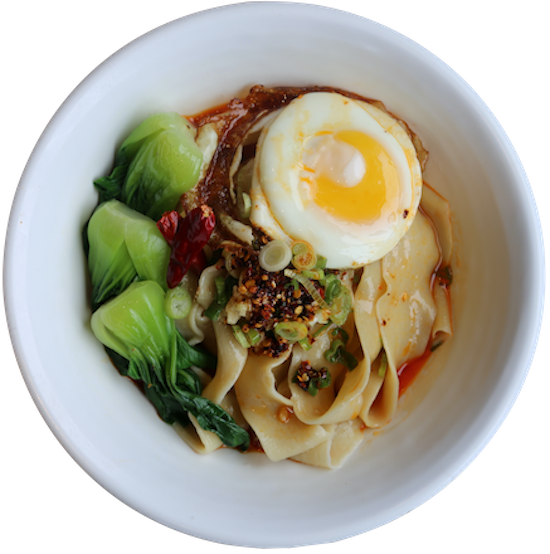
The Lanzhou Ritual: How to Properly Eat Hand-Pulled Noodles
There are bowls of noodles, and then there is Lanzhou niu rou lamian—a dish so precise in its construction that eating it demands the same reverence as its creation. At Magic Noodle (大槐树), we do not merely serve ramen. We preserve a ritual that stretches back to the Tang Dynasty, when Muslim Hui masters first pulled wheat dough into gossamer strands over bubbling cauldrons of beef bone broth.
Step One: The Broth Revelation
Before your chopsticks touch a single strand, lift the bowl with both hands and sip the clear broth first. This is non-negotiable. The broth—simmered for eight to twelve hours from grass-fed beef bones, daikon radish, and a proprietary blend of white pepper, ginger, and star anise—should be translucent as mountain spring water. Its aroma carries the wok-hei of patience: no shortcuts, no MSG shortcuts, no cloudy compromise. The first sip calibrates your palate. You taste the marrow, the gentle sweetness of rendered collagen, the warmth that spreads from chest to fingertips.
Step Two: The Pull and the Slurp
Now observe the noodles themselves. A true la mian master pulls dough through six distinct stages—he tui, jiu tui, jiu ding, jiu fu, jiu kuai—transforming a lump of flour, water, and peng hui (alkaline salt) into ribbons of varying gauge. At Magic Noodle, we offer:
- 毛细 (mao xi): hair-thin, delicate, for broth lovers who prize soup over substance
- 二细 (er xi): the balanced standard, springy with proper bite
- 韭叶 (jiu ye): flat as chive leaves, carrying more sauce per strand
- 大宽 (da kuan): belt-wide, chewy, for the texturally ambitious
Whatever your choice, slurp vigorously. This is not poor manners in Lanzhou; it is aeration. The rush of air through your mouth volatilizes the wheat aromatics, carries steam through your nasal cavity, and cools the noodles to that perfect threshold where chew meets tenderness. The sound itself—sluuurp—is your applause for the puller.
Step Three: The Personalization
Only after tasting the broth and noodles in their pristine state should you customize. Add black vinegar (Chencu or Zhenjiang) by the spoonful to brighten the broth with malic acidity. Dot with fresh chili oil (la you)—ours is infused with thirty-six spices and dried Qinong chili—stirring until the surface shimmers crimson. The oil should sit in droplets, not pools. The vinegar should sharpen, not mask.
The Texture Testimony
A properly pulled noodle has jindao—muscle, elasticity, memory. It should resist your bite briefly, then snap clean. It should never mush. The broth should cling to each strand without drowning it. This is the Qingtang doctrine: clarity above all, flavor through restraint, technique as the ultimate seasoning.
At Magic Noodle, we pull to order. The dough you see slapping against our marble counter becomes your meal within three minutes. This is not fast food. This is fast craft—the difference between a printed photograph and a brushstroke.
Eat it all. Drink the broth to the last golden drop. Leave nothing but the pattern of your chopsticks on the porcelain. This is how you honor the Lanzhou ritual.