2026-06-06
Breath of the Wok: The Science Behind Wok Hei Fried Noodles
Discover how 120,000 BTU flames, hand-pulled Lanzhou noodles, and Maillard reactions create the elusive wok hei that defines our signature fried noodles.
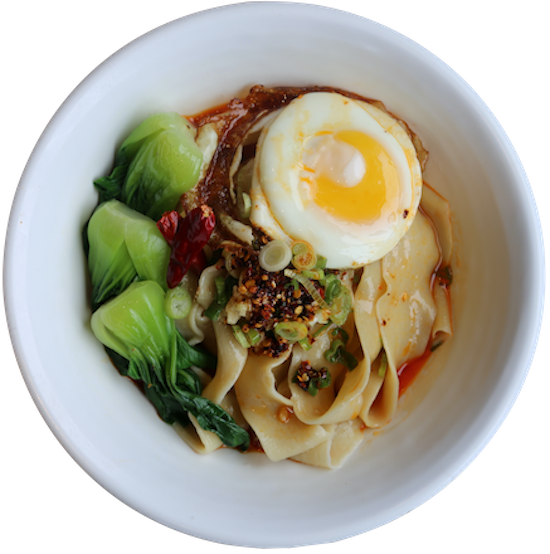
The Alchemy of Fire and Steel
At Magic Noodle (大槐树), wok hei is not folklore. It is thermochemistry in motion. The term translates to breath of the wok, that ephemeral smoky aroma clinging to properly stir-fried noodles. Achieving it demands equipment, technique, and ingredients operating at extremes that home kitchens cannot replicate.
The 120,000 BTU Inferno
Our Cantonese-style cast iron woks sit above jet-engine intensity burners reaching 120,000 BTUs. For perspective, residential stoves peak around 12,000 BTU. This violent thermal energy accomplishes three critical objectives simultaneously:
- Instant surface dehydration: Moisture evaporates within milliseconds, preventing soggy noodles
- Maillard reaction acceleration: Amino acids and reducing sugars react at 140-165°C, generating hundreds of flavor compounds
- Smoke point activation: Refined peanut oil smokes at 232°C, volatilizing into aromatic hydrocarbons that deposit on every strand
Hand-Pulled Architecture
Our noodles begin as Lanzhou-style hand-pulled dough, stretched and folded through san ding (三醒) resting cycles. This develops gluten networks with irregular, craggy surfaces—microscopic topography that maximizes contact with the wok and captures more wok hei. Uniform machine-extruded noodles cannot compare.
The seafood medley in our Seafood Fried Noodle—plump shrimp, tender scallops, crisp snap peas, and shiitake—demands sequential cooking. Proteins hit the wok first, removed at precise temperatures, then reintroduced with vegetables and noodles for final assembly. Overcooking by seconds ruins texture.
The Signature Beef Broth Foundation
Even our fried noodles carry ancestral DNA from our clear beef broth, simmered for eight hours with grass-fed beef bones, daikon radish, and a dozen aromatics. A ladle incorporated during final wok tosses adds umami depth without dilution.
Why Wok Hei Evades Capture
The smoky aroma itself derives from thermal cracking of oil molecules and pyrolysis of minute food particles—unstable compounds dissipating within minutes of plating. This is why wok hei fried noodles must be consumed immediately, steam still rising, before the volatile aromatics flee into the kitchen air.
At Magic Noodle, we do not serve wok hei. We serve the impossible moment when fire, steel, dough, and decades of muscle memory converge into something that cannot be documented, only experienced.